Jyotiṣa
Astronomy & Cosmology
Jyotiṣa (ज्योतिष), derived from jyoti meaning "light" or "celestial body," represents one of humanity's oldest systematic studies of the cosmos. Indian astronomers made remarkable observations and calculations that influenced astronomical traditions across Asia, the Middle East, and eventually Europe.
Unlike purely mythological approaches, Indian astronomical texts combined empirical observation with mathematical precision. Āryabhaṭa's proposition that the Earth rotates on its axis — made a millennium before Copernicus — exemplifies this scientific spirit.
Key Achievements
Heliocentric insights: Understanding that Earth moves around the Sun
Accurate calculation of π (pi) to 4 decimal places
Precise lunar month calculation (27.32 days)
Solar year calculation accurate to within minutes
Development of trigonometric functions (sine, cosine)
Accurate prediction of eclipses
Understanding of gravity as an attractive force
Calculation of Earth's circumference within 1% accuracy
Interactive Timeline
Explore the historical development through periods and key figures. Click on any event or scholar to learn more.
Mathematical Astronomy Emerges
This golden age saw astronomy become a precise mathematical science. The Sūrya Siddhānta introduced trigonometric functions and planetary models. Āryabhaṭa's revolutionary work proposed Earth's rotation and developed sine tables that would influence Islamic and European astronomy.
Āryabhaṭa
Born in Kusumapura during the Gupta Empire, Āryabhaṭa revolutionized astronomy and mathematics. At age 23, he composed the Āryabhaṭīya, a compact yet profound treatise that would influence scholars for over a millennium. His work reached the Islamic world through translations and eventually Europe, where his methods shaped Renaissance astronomy.
Varāhamihira
A polymath who contributed to astronomy, mathematics, and astrology. Varāhamihira's encyclopedic knowledge synthesized Indian astronomical traditions with Greek and other foreign influences. His Pañcasiddhāntikā compared five different astronomical systems, demonstrating remarkable scholarly objectivity.
Brahmagupta
Head astronomer at the Ujjain observatory, Brahmagupta made fundamental contributions to both astronomy and mathematics. His Brāhmasphuṭasiddhānta was translated into Arabic in 771 CE as 'Zij al-Sindhind' and profoundly influenced Islamic astronomy. He was among the first to describe gravitational force as an inherent property of matter.
Refinement and Transmission
Brahmagupta refined planetary calculations and introduced gravitational concepts. Bhāskara II's Siddhānta Śiromaṇi represented the pinnacle of classical Indian astronomy. Indian astronomical knowledge spread to the Islamic world through translations in Baghdad.
Bhāskara II (Bhāskarācārya)
Often called Bhāskarācārya ('Bhāskara the Teacher'), he represented the culmination of classical Indian astronomy. His works synthesized centuries of astronomical knowledge while adding original insights. His daughter Līlāvatī inspired the name of his famous mathematics text. His astronomical calculations were so accurate that they remained in use for centuries.
Regional Schools and Continuity
Regional astronomical schools flourished, particularly in Kerala. Astronomers refined calculations and developed new instruments. The tradition maintained its vitality even as Islamic astronomical ideas entered India.
Foundations of Observational Astronomy
Early Vedic texts like the Ṛgveda contain astronomical observations. The Vedāṅga Jyotiṣa established a systematic approach to tracking celestial cycles for ritual timing. Astronomers identified nakṣatras (lunar mansions) and developed luni-solar calendars.
Historical Development
Foundations of Observational Astronomy
Early Vedic texts like the Ṛgveda contain astronomical observations. The Vedāṅga Jyotiṣa established a systematic approach to tracking celestial cycles for ritual timing. Astronomers identified nakṣatras (lunar mansions) and developed luni-solar calendars.
Key Events:
- •Development of nakṣatra system (27 lunar mansions)
- •Vedāṅga Jyotiṣa composed (~1400 BCE)
- •Recognition of five visible planets
Mathematical Astronomy Emerges
This golden age saw astronomy become a precise mathematical science. The Sūrya Siddhānta introduced trigonometric functions and planetary models. Āryabhaṭa's revolutionary work proposed Earth's rotation and developed sine tables that would influence Islamic and European astronomy.
Key Events:
- •Sūrya Siddhānta composed (~400 CE)
- •Āryabhaṭa proposes Earth's rotation (499 CE)
- •Development of sine (jyā) and cosine (koṭi-jyā)
- •Accurate eclipse predictions using shadow geometry
Refinement and Transmission
Brahmagupta refined planetary calculations and introduced gravitational concepts. Bhāskara II's Siddhānta Śiromaṇi represented the pinnacle of classical Indian astronomy. Indian astronomical knowledge spread to the Islamic world through translations in Baghdad.
Key Events:
- •Brahmagupta's Brāhmasphuṭasiddhānta (628 CE)
- •Transmission to Islamic scholars in Baghdad
- •Bhāskara II's Siddhānta Śiromaṇi (1150 CE)
- •Development of sophisticated astronomical instruments
Regional Schools and Continuity
Regional astronomical schools flourished, particularly in Kerala. Astronomers refined calculations and developed new instruments. The tradition maintained its vitality even as Islamic astronomical ideas entered India.
Key Events:
- •Kerala school astronomical innovations
- •Synthesis with Islamic astronomical traditions
- •Continued refinement of observational techniques
Key Figures
Āryabhaṭa
476–550 CE
📍 Kusumapura (modern Patna)
Born in Kusumapura during the Gupta Empire, Āryabhaṭa revolutionized astronomy and mathematics. At age 23, he composed the Āryabhaṭīya, a compact yet profound treatise that would influence scholars for over a millennium. His work reached the Islamic world through translations and eventually Europe, where his methods shaped Renaissance astronomy.
Major Contributions
- •Proposed Earth's axial rotation to explain day and night cycles
- •Calculated Earth's circumference as 39,968 km (actual: 40,075 km)
- •Approximated π (pi) as 3.1416, remarkably accurate for his time
- •Developed sine tables (ardha-jyā) foundational to trigonometry
- •Explained lunar and solar eclipses through shadow mechanics
Brahmagupta
598–668 CE
📍 Bhillamāla (Rajasthan)
Head astronomer at the Ujjain observatory, Brahmagupta made fundamental contributions to both astronomy and mathematics. His Brāhmasphuṭasiddhānta was translated into Arabic in 771 CE as 'Zij al-Sindhind' and profoundly influenced Islamic astronomy. He was among the first to describe gravitational force as an inherent property of matter.
Major Contributions
- •Calculated the length of the solar year as 365 days, 6 hours, 5 minutes, 19 seconds
- •Described gravitational attraction: 'Bodies fall towards the earth as it is in the nature of the earth to attract bodies'
- •Developed methods for calculating planetary positions with unprecedented accuracy
- •Authored Brāhmasphuṭasiddhānta, influential across Arabia and Europe
Bhāskara II (Bhāskarācārya)
1114–1185 CE
📍 Karnataka/Maharashtra region
Often called Bhāskarācārya ('Bhāskara the Teacher'), he represented the culmination of classical Indian astronomy. His works synthesized centuries of astronomical knowledge while adding original insights. His daughter Līlāvatī inspired the name of his famous mathematics text. His astronomical calculations were so accurate that they remained in use for centuries.
Major Contributions
- •Calculated planetary positions with remarkable accuracy
- •Described sophisticated astronomical instruments in Siddhānta Śiromaṇi
- •Understood concepts related to gravity centuries before Newton
- •Calculated the solar year length accurate to within minutes
Varāhamihira
505–587 CE
📍 Ujjain
A polymath who contributed to astronomy, mathematics, and astrology. Varāhamihira's encyclopedic knowledge synthesized Indian astronomical traditions with Greek and other foreign influences. His Pañcasiddhāntikā compared five different astronomical systems, demonstrating remarkable scholarly objectivity.
Major Contributions
- •Compiled Pañcasiddhāntikā, summarizing five astronomical schools
- •Integrated Greek, Egyptian, and Roman astronomical knowledge with Indian traditions
- •Developed sophisticated almanac calculations
- •Authored Bṛhat Saṃhitā, an encyclopedic work covering diverse topics
Knowledge Network Connections
This domain is interconnected with other areas of knowledge, demonstrating the integrated nature of ancient Indian intellectual traditions.
Mathematics
Astronomy relied heavily on advanced mathematics, particularly trigonometry. The development of sine tables by Āryabhaṭa was motivated by astronomical needs.
Architecture
Astronomical knowledge informed temple architecture, with structures aligned to solstices, equinoxes, and stellar positions for ritual precision.
Music
The cosmic cycles and mathematical ratios discovered in astronomy influenced music theory, with planetary periods related to musical intervals.
Foundational Texts
Āryabhaṭīya
499 CE
Foundational text covering mathematics, planetary positions, and time calculation
Sūrya Siddhānta
~400 CE
Comprehensive astronomical treatise describing planetary diameters and distances
Brāhmasphuṭasiddhānta
628 CE
Refined astronomical calculations and introduced concepts of gravity
Siddhānta Śiromaṇi
1150 CE
Advanced treatise on astronomy and mathematical astronomy
Visual Explorations
Key Concepts Visualized
Earth's Rotation
Āryabhaṭa's revolutionary insight that Earth rotates on its axis, explaining day-night cycles through motion rather than celestial movement.
Eclipse Mechanics
Ancient Indian astronomers explained eclipses through precise shadow calculations, rejecting mythological explanations.
Educational Videos
Historical Timeline
Āryabhaṭīya published
Established Earth's rotation theory
Brahmagupta's astronomical treatise
Refined planetary calculations
Bhāskara II's Siddhānta Śiromaṇi
Advanced astronomical instruments
Educational Videos on Jyotiṣa
Curated video lectures on Vedic astronomy, cosmology, and the science of Jyotiṣa
Click ▶ to play inline · Use ↗ to open on YouTube
Multimedia Resources
Educational Videos
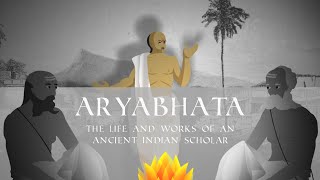
Āryabhaṭa's Contributions to Astronomy & Mathematics
A documentary exploring Āryabhaṭa's groundbreaking discoveries in astronomy and mathematics that shaped the world.
Watch on YouTube ↗
Ancient Indian Contributions to Astronomy
From the Indian Knowledge System series — remarkable contributions of ancient Indian astronomers to astronomy.
Watch on YouTube ↗
India's Greatest Astronomers
A fascinating account of ancient India's greatest astronomers and their global impact on mathematics and astronomy.
Watch on YouTube ↗Visual Gallery

Ancient Celestial Observations

Night Sky — The Nakshatra Canvas

Ancient Sanskrit Manuscripts
Audio Recordings
Gāyatrī Mantra — Hymn to the Sun
The most sacred Vedic verse invoking Savitṛ, the solar deity — chanted since ancient times by astronomers and rishis
3:42Vedic Sūkta — Hymn to Sūrya (Sun)
Ṛgvedic hymn to the sun god Sūrya, reflecting early Indian understanding of the solar cosmos
4:10Further Exploration
Discover how this knowledge system connects with other domains
Mastery Assessment
Test your understanding and track your progress in Astronomy
Community Discussions
No discussions yet. Start the conversation!
Ask an Expert
No answered questions yet. Be the first to ask!
Further Reading & Resources
7 resources found

