Q1-R13 · Civilizational Metallurgy
India’s Mastery of Iron & Steel
For over four millennia, Indian smiths turned fire and ore into the world’s most extraordinary metals — rustless iron, legendary steel, and the first industrial zinc.
Indian metallurgy is not a single invention but a continuous tradition — from the lost-wax bronzes of the Indus-Sarasvati cities to the rustless iron pillar of the Guptas, and from the crucible steel of the Deccan to the zinc retorts of Rajasthan. Each step reveals a civilization that learned to read fire, ore, and air with extraordinary precision.
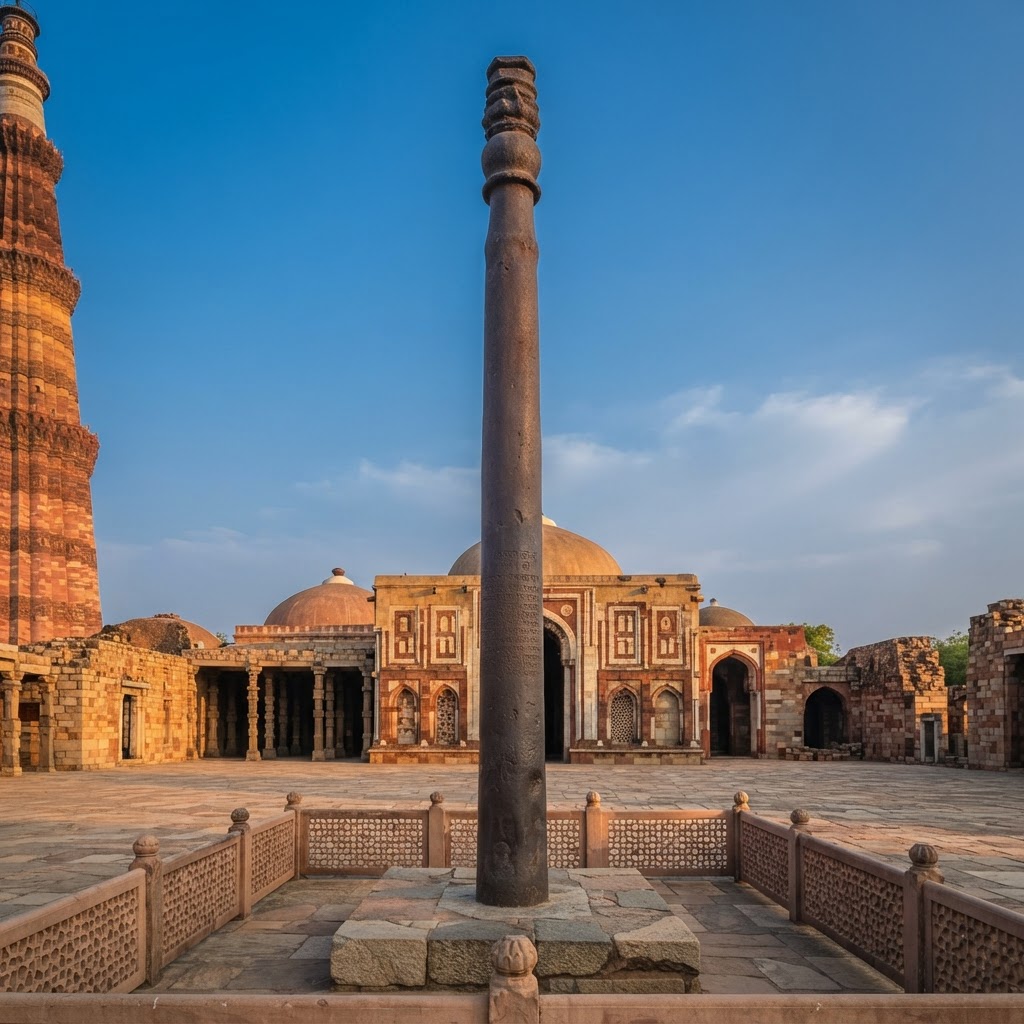
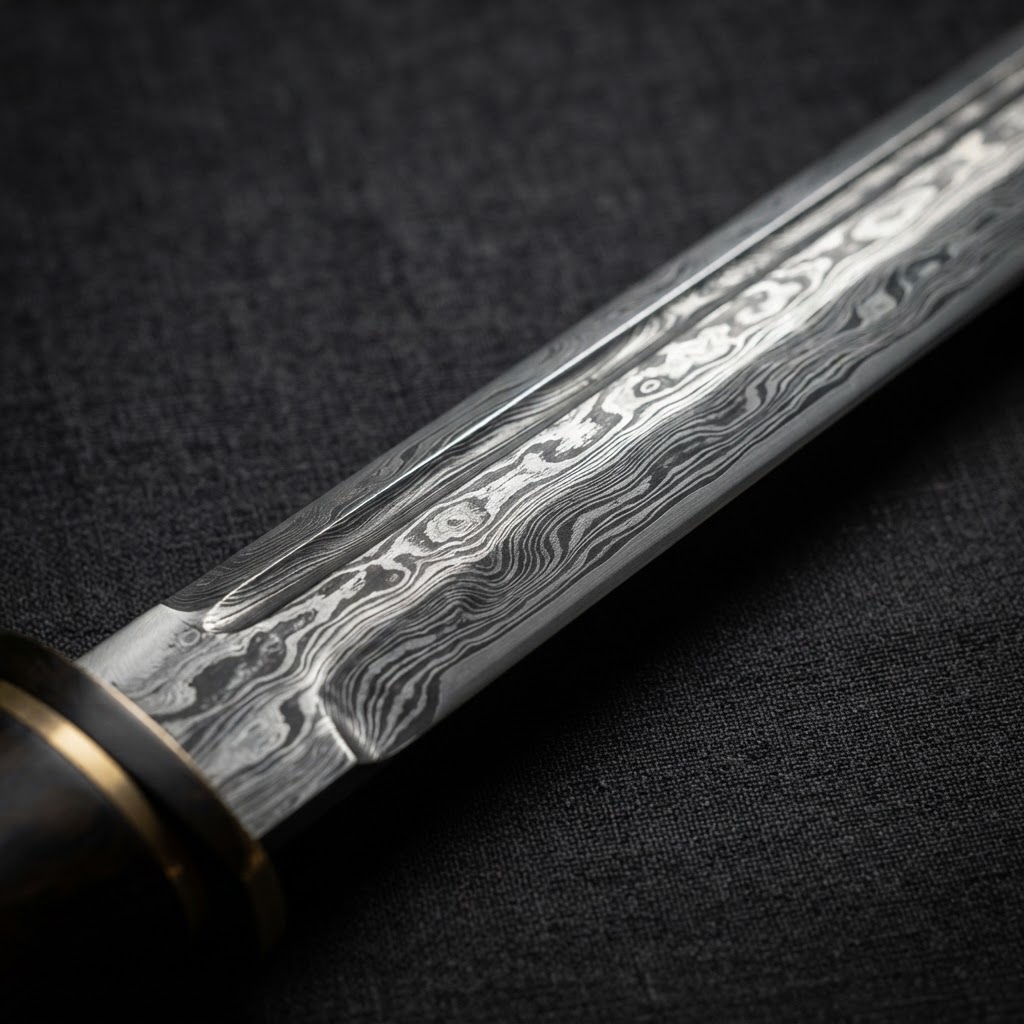
What the world later called “Damascus steel” began as Indian wootz. The pillar that has stood rust-free in Delhi for 1,600 years still challenges modern corrosion science. And the metal Europe could not smelt until the 18th century — zinc — was being distilled in India a thousand years earlier.
Landmarks of Indian Metal
Techniques India Mastered
Crucible Steel (Wootz)
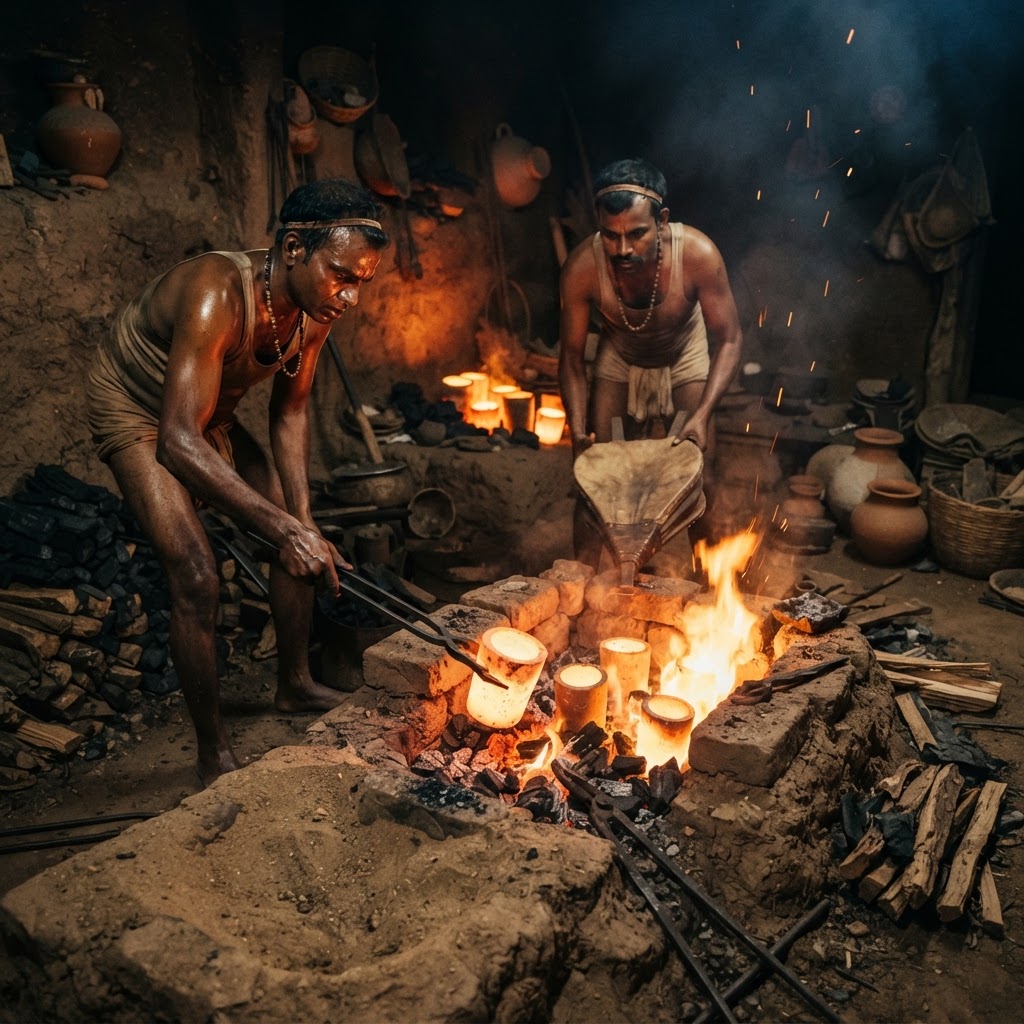
Carburizing wrought iron in closed crucibles with green-wood leaves and specific fluxes yielded high-carbon steel with a characteristic crystalline pattern.
Zinc Distillation
At Zawar, downward-distillation retorts condensed zinc vapour — the first industrial recovery of a metal that boils at ~907°C, 1,000 years before Europe.
Lost-Wax Casting
Bronze icons and the Mohenjo-daro Dancing Girl were cast by the cire-perdue method — a model in wax, invested in clay, melted out, then poured in metal.
Corrosion Control
The Iron Pillar’s resistance comes from a phosphorus-enhanced, slag-layered surface film — an accidental mastery of passivation.
A 4,000-Year Lineage
India in the Global Metallurgy Story
When civilizations first mastered key metals

